
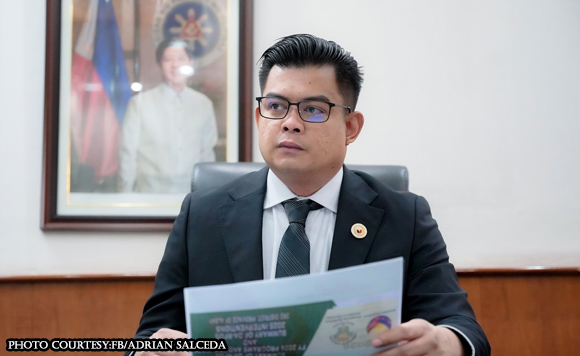
The Cebu City Council or Sangguniang Panglungsod has unanimously passed a resolution expressing full support to House Bill No. 6553, crafted and filed by Albay 3rd District Rep. Raymond Adrian E. Salceda, which seeks to abolish the estate tax in the Philippines.
Resolution No. 17-2053-2026, adopted during the city council’s regular session last January 13, pointed out that the estate tax or levy on property left to the family by a deceased Filipino, is “regressive and burdensome,” particularly for low-income and grieving families.
The resolution highlights the irony of imposing estate taxes on bereaved families at their most vulnerable moments, noting that individuals who have “dutifully paid real property taxes throughout their lifetimes are again subject to taxation at the moment of their death, effectively penalizing the act of passing down wealth or property to their loved ones.”
Rep. Salceda has earlier echoed the same sentiment. “When a loved one dies, does his family really have time to deal with estate matters?,” he asks and refers to the levy as a ‘tax on grief.’
“Families are grieving. They need space to recover, not pressure to produce cash for a tax that arises only because someone passed away,” he stressed.
The Cebu City council noted that the estate tax “undermines the dignity of grieving families” and forces them to navigate complex bureaucratic hurdles “when they are meant to focus on healing and remembrance.”
Under HB 6553, as proposed by Salceda, the estate tax would be abolished entirely. Instead, inherited property would only be taxed when eventually sold, through a “Deferred Succession Component” added to the existing capital gains tax.
The young Albay lawmaker said this approach ensures heirs have liquidity when taxes come due, adding that the current system causes more economic harm than the revenue it generates. “The BIR’s annual estate tax collection is only P14 billion, and the damage it causes is greater,” he pointed out.
“Titles cannot be transferred immediately. Properties are left idle. Banks cannot lend because paperwork is not in order,” he added.
Salceda’s office estimates that delayed estate transfers cost the Philippine economy approximately P78 billion annually — more than five times the tax revenue collected.
The Cebu City Council resolution, dubbed as a pro-poor reform, emphasizes that the estate tax disproportionately affects ordinary Filipino families. Wealthy individuals can easily restructure assets through corporations and holding companies to minimize estate tax obligations, while middle-class families with insignificant or modest inherited properties — often face the full burden of compliance.
“Many families are compelled to sell portions, or even the entirety of inherited property just to settle an estate tax…leading to displacement, loss of generational wealth, and disconnection from ancestral lands and homes,” it noted.
“I thank the City Government and the People of Cebu. It is the largest economy outside Manila, and their voice matters in this growing movement,” Salceda said.
The push to abolish the estate tax has also garnered editorial support. The Manila Times, in a December 2025 editorial titled “Remove the death tax now,” called the proposal “simpler and more humane” and urged swift legislative action.
The original Cebu City Council resolution had inadvertently attributed HB 6553 to former Albay 2nd District Rep. Joey Salceda who was former chairman of the House Ways and Means Committee, and uncle of Rep. Adrian E. Salceda.